Before the First Drop: Why Readiness Matters for the Operating Season
There is a moment, before teams head into the field, when waiting is no longer an option.
The plans have been made. The season is approaching. And the people who will spend the coming months on the road, in communities, and in the field begin preparing themselves for what lies ahead.
They know the work will not always go according to plan. They know the dry season will not last forever. And they know that somewhere, a community is waiting for them to arrive.
For the people who carry out the work, the operating season doesn't begin when the drilling starts.
It begins much earlier.
Preparation Is Learning
For Pasquina, Water for South Sudan's Program Manager, preparing for an operating season means looking ahead.
Each operating season leaves lessons behind. What worked? What didn't? Where did teams face challenges? What should be done differently next time?
Those lessons become part of the next season's plan.
“The previous season's challenges directly shape the next season's budget.”
That mindset turns preparation into more than a checklist. It becomes a continuous process of learning, adapting and improving.
By the time the season begins, teams have been recruited, locations assessed, equipment prepared and plans made for what might change.
Preparation doesn't mean knowing exactly what will happen. It means learning from the past well enough to respond to what comes next.
Begin With What Is Needed
For Mathew, Water for South Sudan's Hygiene & Drilling Manager, readiness begins with knowing what is needed and making sure it is ready before the teams leave.
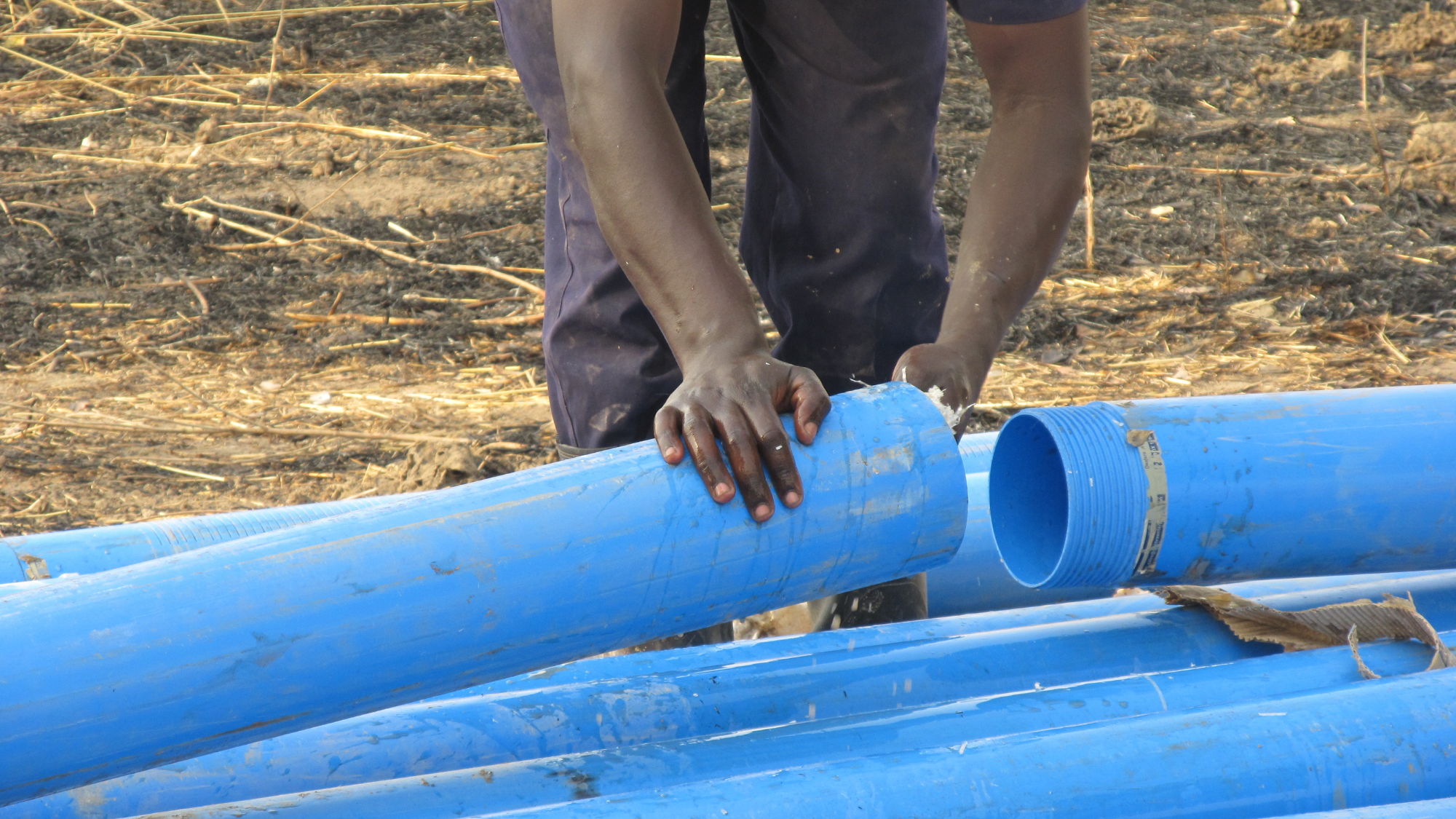
In the warehouse, stainless-steel raising pipes, tools, spare parts, and other supplies are organized and tracked through regular inventory counts. This helps the team see what is available, identify what is running low, and allow time to order supplies before they are needed in the field.
Mathew has also helped improve how items are arranged and tracked, making it easier to locate what teams need when they need it. Among the items he watches most closely are spare parts for the Iveco trucks—equipment that is essential to keeping vehicles ready for the work ahead.
By the time the first truck leaves for the field, supplies have been requested and approved, the vehicle has been inspected, and the handoff to the driver is complete.
What looks like a truck leaving the warehouse is the final step in months of preparation.
Readiness Is a Mindset
For Khamis, Water for South Sudan's Head Mechanic, readiness is built long before the rigs leave the yard.
After 25 years as a mechanic, Khamis knows that a small problem can become a much larger one when a team is far from home and working within a limited season.
A problem with a vehicle or drilling rig can bring an entire team to a stop. So before a rig ever reaches a community, Khamis is listening.
He listens for bad noises. He looks for leaks. He watches for vibration and signs of burning fluids. When a machine is ready, he knows what that sounds like, too: a smooth engine idle, full fluid levels and green status lights signaling that it is safe to work.
For Khamis, readiness isn't an abstract idea. It is something he can see, hear and feel.
And readiness isn't about expecting everything to go perfectly.
It's about being prepared to respond when it doesn't.
That preparation comes from years of experience—and from knowing how much depends on getting the details right. Khamis has had to dismantle transmissions, diagnose worn parts and repair equipment when something goes wrong. He knows the difference between a machine that is simply running and one that is ready for the demands of the field.
And ultimately, that's what makes the work worthwhile. Khamis says he is happiest when he is on the ground, working alongside the team and helping deliver what communities need.
The preparation has a purpose: to make sure the work can continue when the team gets there.
When Preparation Meets the Unexpected
Once teams leave, preparation meets reality.
Isaac, Water for South Sudan's WASH Manager and a senior supervisor of drilling operations, knows that even the best preparation cannot eliminate every unexpected challenge.
“You can prepare everything perfectly ... and challenges will still come.”
A broken spring once threatened to stop a drilling team. Instead of waiting weeks for a replacement, Isaac and the driller found a compatible part locally and kept working.
When the team realized they were running short of a material needed to continue safely, Isaac found another source to keep the work moving until the ordered supply arrived.
For Isaac, readiness means more than having a plan.
It requires commitment, energy and concentration—and the willingness to adapt when circumstances change.
That is what makes preparation valuable.
Not because it prevents every problem, but because it gives people a better chance of responding to the problems they cannot prevent.
Because Someone Is Waiting
For Dominic, Water for South Sudan's Procurement & Logistics Officer, the consequences of those decisions are personal.
When a shipment is delayed or a project takes longer than expected, he doesn't think first about paperwork or schedules.
He thinks about the community waiting.
“We promised the community that the project would be completed ...
I worry they may think we are not telling the truth. I have a responsibility to make sure WFSS delivers on its promise to communities.”
That is the responsibility behind the preparation.
The goal isn't simply to complete a plan.
It is to show up.
To keep a promise.
To keep working when something unexpected happens.
Dominic describes his connection to the work simply:
“I cannot be well if I don't do this work.”
For Pasquina, readiness means learning from the past.
For Mathew, it means making sure people have what they need to do the work.
For Khamis, it means preparing for what might go wrong.
For Isaac, it means staying focused when it does.
For Dominic, it means making sure WFSS keeps its promise to the community.
Their roles and responsibilities are different.
But they are preparing for the same moment.
The moment when it is time to go.
Readiness Matters
The first drop of water may be the moment a community sees the result of months of work.
But it isn't the beginning of the story.
Long before a drilling team arrives, people are already preparing—learning, planning, adapting and getting ready to do the work.
Because readiness isn't about knowing exactly what will happen. It's about being ready for what might.
And behind that readiness is something even more important: A community is waiting.
Reliable water depends on the systems and people behind it—and preparation is what allows those systems to keep working when conditions change.
Reliable water doesn't begin with the first drop. It begins much earlier—with people who are ready to go.