Glossary: South Sudan & Clean Water Initiatives
This glossary is designed to support readers in understanding key terms related to South Sudan, water access, and the mission of Water for South Sudan.
A
Access to Clean Water: The availability of safe, potable water for drinking, cooking, and hygiene.
Aquifer: An underground layer of water-bearing rock or sediment that can supply wells and boreholes.
B
Borehole: A deep, narrow well drilled into the ground to access groundwater.
C
Clean Water Crisis: A situation in which communities lack reliable access to safe drinking water.
D
Diarrheal Diseases: Illnesses often caused by contaminated water, including cholera and dysentery.
Drilling Rig: A machine used to drill boreholes for water access.
Dry Season: A seasonal period of hot, sunny, and arid conditions with minimal rainfall and temperatures greater than 40℃ (104℉).
E
Equatorial Climate: A hot, often seasonal climate influencing water availability in South Sudan.
G
Gender Equality: All people, regardless of gender, have equal rights, responsibilities, and opportunities in all aspects of life. True gender equality in South Sudan requires not only equal access to resources like safe water and sanitation, but also the meaningful inclusion of women's voices in the planning, leadership, and management of water projects.
Guinea Worm: A waterborne parasitic infection contracted by drinking water containing larvae-infected water fleas.
Groundwater: Water located beneath the Earth’s surface in soil and rock formations.
Geological Survey Equipment: A tool used to map subsurface conditions.
H
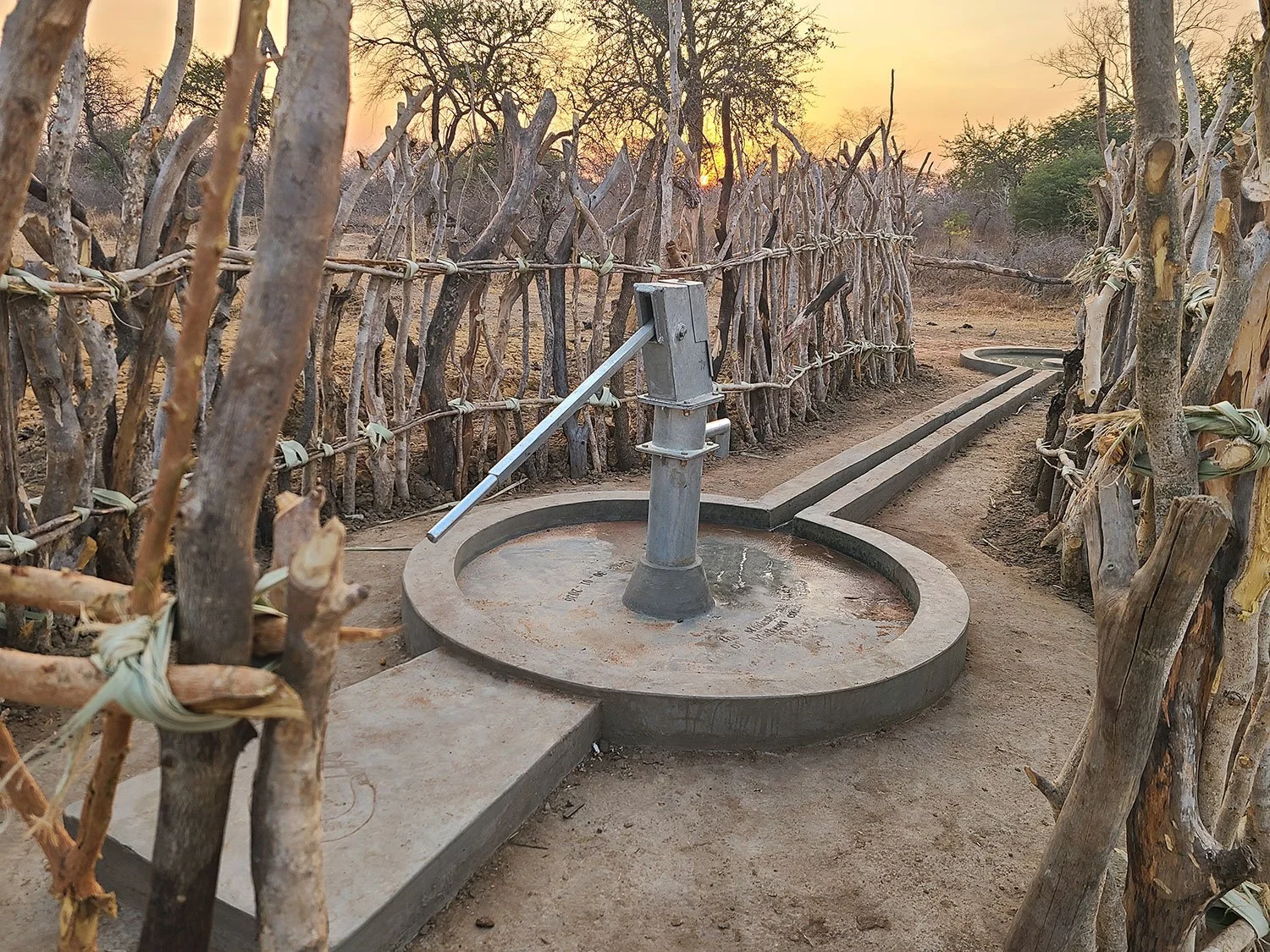
Hand Pump: A manually operated pump used to draw water from a borehole.
Hygiene Education: Teaching communities safe practices to prevent disease.
I
Internally Displaced Persons (IDPs): Individuals who have been forced from their homes due to insecurity and disasters, while remaining within their home country’s borders.
Infrastructure (Water): Physical systems such as wells, pumps, and pipes that provide water access.
J
Jerrycan: A durable container commonly used to carry water.
L
Latrines: A basic sanitation facility used for the disposal of human waste. Types of latrines include:
Pit Latrine – A simple hole dug in the ground where waste falls into a pit below.
Ventilated Improved Pit (VIP) Latrine – A pit latrine fitted with a ventilation pipe to reduce odors and flies.
Pour-Flush Latrine – A latrine that uses a small amount of water to flush waste through a pipe into a pit or drain.
Composting Latrine – A latrine that converts human waste into compost through natural decomposition, which can be used as fertilizer.
Urine-Diverting Dry Toilet (UDDT) – A latrine that separates urine from solid waste to reduce odor and make waste easier to manage safely.
Trench Latrine – A shallow, narrow trench dug in the ground, typically used as a temporary solution for groups or displaced populations.
Arborloo – A simple pit latrine that, once full, is covered with soil and used to grow a tree, naturally processing the waste.
Container-Based Latrine – A latrine that collects waste in a sealed container that is regularly emptied and treated by a service provider.
Raised Latrine – A latrine built above ground on a platform, used in areas with high water tables or flooding, common in swampy or flood-prone regions.
Hanging Latrine – A structure built over water or open ground where waste drops directly below, though this is considered unsafe and unhygienic.
Institutional Latrine Blocks – Designed for durability and high daily use, helping create safer environments where children can stay in school and communities can access basic sanitation services.
Emergency Sanitation – During displacement or humanitarian emergencies, temporary or semi-permanent emergency latrines to provide immediate sanitation access.
N
NGO: Non-governmental organizations (NGOs) are non-profit, independent, mission-driven groups addressing social, environmental, and humanitarian issues. Ranging from local community groups to massive international entities.
P
Potable Water: Water that is safe for human consumption.
R
Rainy Season: A seasonal period of heavy rainfall that affects water availability and quality.
S
Sanitation: Practices and systems that promote health through clean waste disposal and hygiene.
Sustainability: Ensuring water systems remain functional long-term through community ownership and training.
T
Tuk-Tuk: A small, three-wheeled motorized vehicle commonly used for transportation in many parts of Africa and Asia. In South Sudan, tuk-tuks may be used to transport people, goods, or even water containers within towns and villages.
Tukol: A traditional South Sudanese round hut, structured with mud, wooden poles, and grass thatched roofs.
W
WASH Cluster: International humanitarian coordination group focused on Water, Sanitation, and Hygiene (WASH) services across South Sudan. It’s part of the global cluster system led by the United Nations, co-led by NRC, and coordinated by agencies like UNICEF. The group promotes WASH interventions that improve dignity and protection for affected populations and that empower women, men, girls and boys to secure their rights to WASH services.
Waterborne Disease: Illness caused by pathogens in contaminated water.
Water Table: The upper level of groundwater in the soil.
Well Rehabilitation: The process of repairing or improving an existing well.