Ten Wells in One Season: The Power of Flexible Funding and Local Leadership
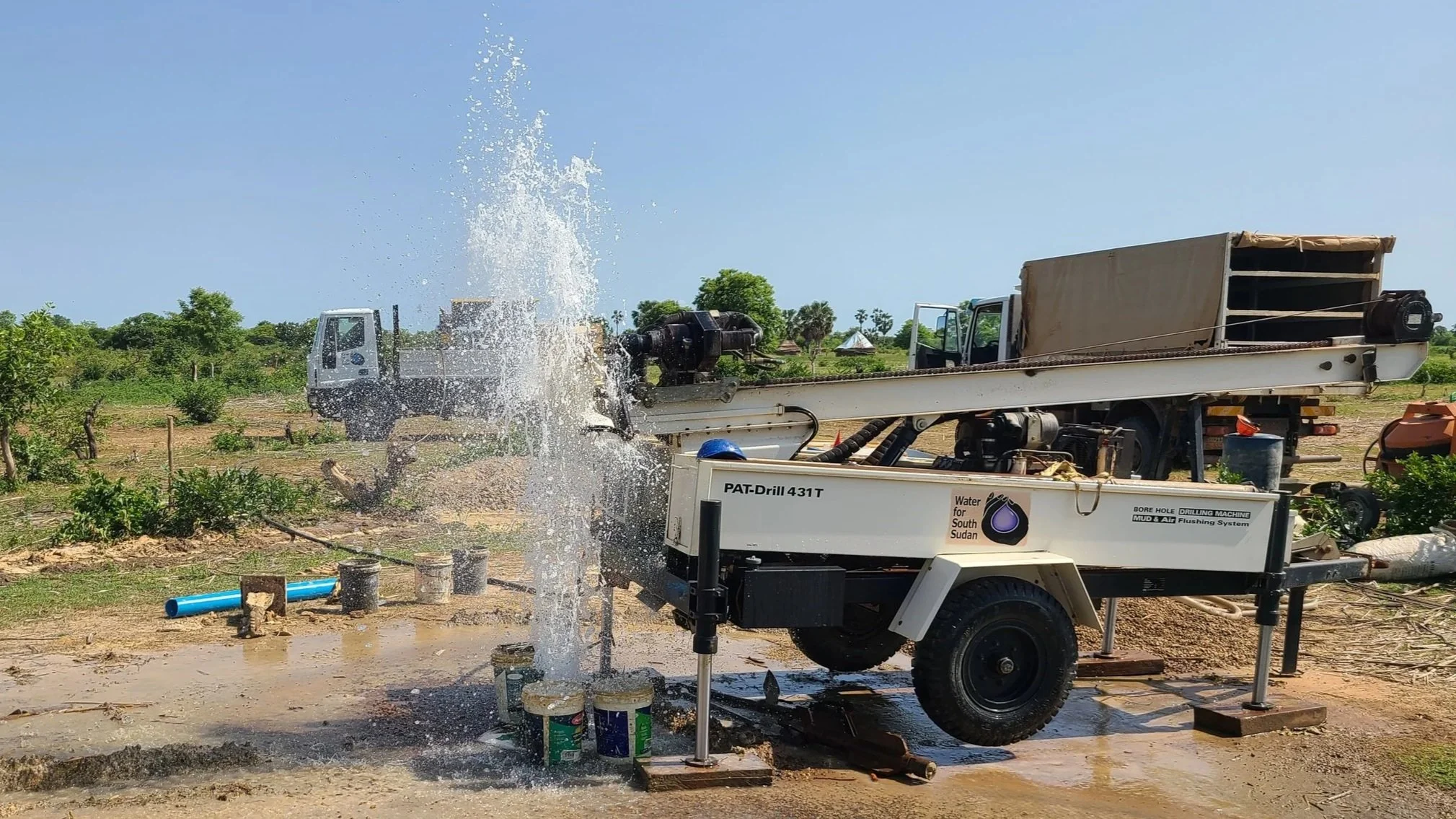
Before the drilling rigs could reach the communities, residents helped clear the way. Along stretches of the route, they cut back dense vegetation by hand so the equipment could pass.
That work was part of a season-long effort to bring ten new wells to Gogrial East and Tonj North Counties in Warrap State. Funding from the Netri Foundation supported ten communities as part of Water for South Sudan’s annual plan, reaching an estimated 5,000 people.
Getting the rigs through was one challenge. Preparing for the years after they left was another.
A Partnership Built on Trust
The Netri Foundation was looking for a new clean-water partner whose approach put communities at the center: one that would listen first, design with residents rather than for them, and leave behind systems people could sustain themselves in the years to come. In late 2025, Netri found that partner in Water for South Sudan (WFSS), and the two organizations came together around a shared conviction: that clean water is the foundation for health, education, stability, and opportunity.
Through WFSS’s model, communities help identify their priorities and take on real responsibility for the systems that serve them. They are not simply receiving infrastructure. They are building small-scale water utilities they can own and sustain.
Rather than prescribe a solution, Netri trusted WFSS to work with communities, understand their needs, and return with a proposal shaped by their priorities. That trust, combined with WFSS’s technical support and the communities’ leadership and commitment, made it possible to turn community priorities into new wells and functioning water systems.
The partnership centered on a clear goal: bringing reliable access to safe water to ten communities.
Finding the Water Beneath the Ground
Before a single drill touched the earth, the real work began with listening and with science. WFSS teams, working alongside County WASH Departments, surveyed underserved communities across the region and identified several locations in urgent need. Ten were ultimately selected, chosen not just for need but for the physical promise the land itself held.
Over three days in February 2026, geophysics teams walked the ground at each site, reading the subsurface for the fractures, faults, and porous formations that hold groundwater. Site by site—Gieric, Payier, Maper, Langkap, Maper Ageep, Akocic, Majak Liet, Makerial, Magurdit, and Aguathdit Pan Mayar—the surveys pointed to viable aquifers, most sitting somewhere between 45 and 90 meters below ground. The data gave the drilling teams confidence that when the rigs finally arrived, they would strike water.
Ten Wells, Ten Communities, One Season
The drilling season ran from January through June 2026, and by its end, all ten wells were complete, functional, and handed over to their communities. Each one now serves an estimated 500 people living within a kilometer of the pump—water that no longer has to be carried for miles or gathered from unprotected, disease-carrying sources.
But a well isn’t finished when the drilling stops. Every one of the ten new water points was tested at the Ministry of Cooperatives and Rural Development’s laboratory in Warrap State, checked against World Health Organization drinking water standards. Every single well passed and was confirmed safe for human consumption at the time of testing—a quiet but critical milestone behind every subsequent celebration.
And there was plenty to celebrate. These weren’t simply wells delivered to communities; they were water sites that communities helped develop and would own and manage. Residents fenced water points themselves, stamped platforms in recognition of their community’s water utility, and gathered to mark the moment their well came online.
Building the People Behind the Pumps
Wells usually fail not because the engineering is wrong, but because no one is left equipped to maintain them once the project team drives away. WFSS and Netri built against that risk from the start.
Ten Water Management Committees were formed, one for each well, with seven trained members apiece: seventy people in total, learning the mechanics of long-term stewardship, including community mobilization, financial accountability, spare parts supply chains, and the basics of protecting a water point from contamination.
Alongside them, twenty hygiene promoters, two per village, were trained and sent door-to-door with a clear mission: teach handwashing at critical moments, explain how disease actually travels from hand to mouth, and show families how to keep the "safe water chain" unbroken from the well to the cup. To help the message reach beyond a single conversation, promoters received a modest stipend for their first three months of outreach. After that, they transitioned to volunteer status, building a lasting habit of service without making it dependent on outside funding.
What Got in the Way and How the Team Adapted
None of this happened without friction. Heavy drilling rigs had to reach remote sites through dense vegetation and roads that barely qualified as roads—problems that communities themselves helped solve, clearing forest tracks by hand so the equipment could pass. Local conflicts forced the team to abandon a handful of preselected sites mid-plan and pivot to safer alternatives without losing momentum. Seasonal flooding did the same, cutting off access to certain survey locations and pushing teams toward accessible backups instead.
None of these setbacks stopped a single well from being completed. If anything, they reinforced something the team already suspected: that a rigid plan is a fragile one.
What the Project Taught Us
This season reinforced that successful implementation depends not only on having a clear plan, but on building enough flexibility into that plan to respond to what happens on the ground. Flooding, access challenges, and changing conditions meant the team had to adapt. These experiences reinforced the value of identifying alternatives early and giving local teams the tools and authority to respond when conditions changed.
It also showed that the work does not end when infrastructure is completed. Continued training, follow-up, and local ownership are essential to sustaining the systems and practices established during the project.
A Season of Water, and What It Makes Possible
By the close of the fiscal year, the numbers told a clean story: ten new wells, all functional. An estimated 5,000 people with safe water access. Seventy committee members trained to keep the wells running. Twenty hygiene promoters carrying the message of health from door to door. All of it was delivered on budget, within a single drilling season.
Ultimately, this partnership provided the infrastructure, but the communities provided the drive. From clearing access roads through the brush to building protective fences in Gieric, local residents took ownership from day one. Today, ten trained Water Management Committees are collecting maintenance fees and securing spare parts. The drilling season is over, but because these communities are now running their own water utilities, the impact is just beginning.