From the Field: Suzan Wol on 12 Years of Changing Habits, One Household at a Time
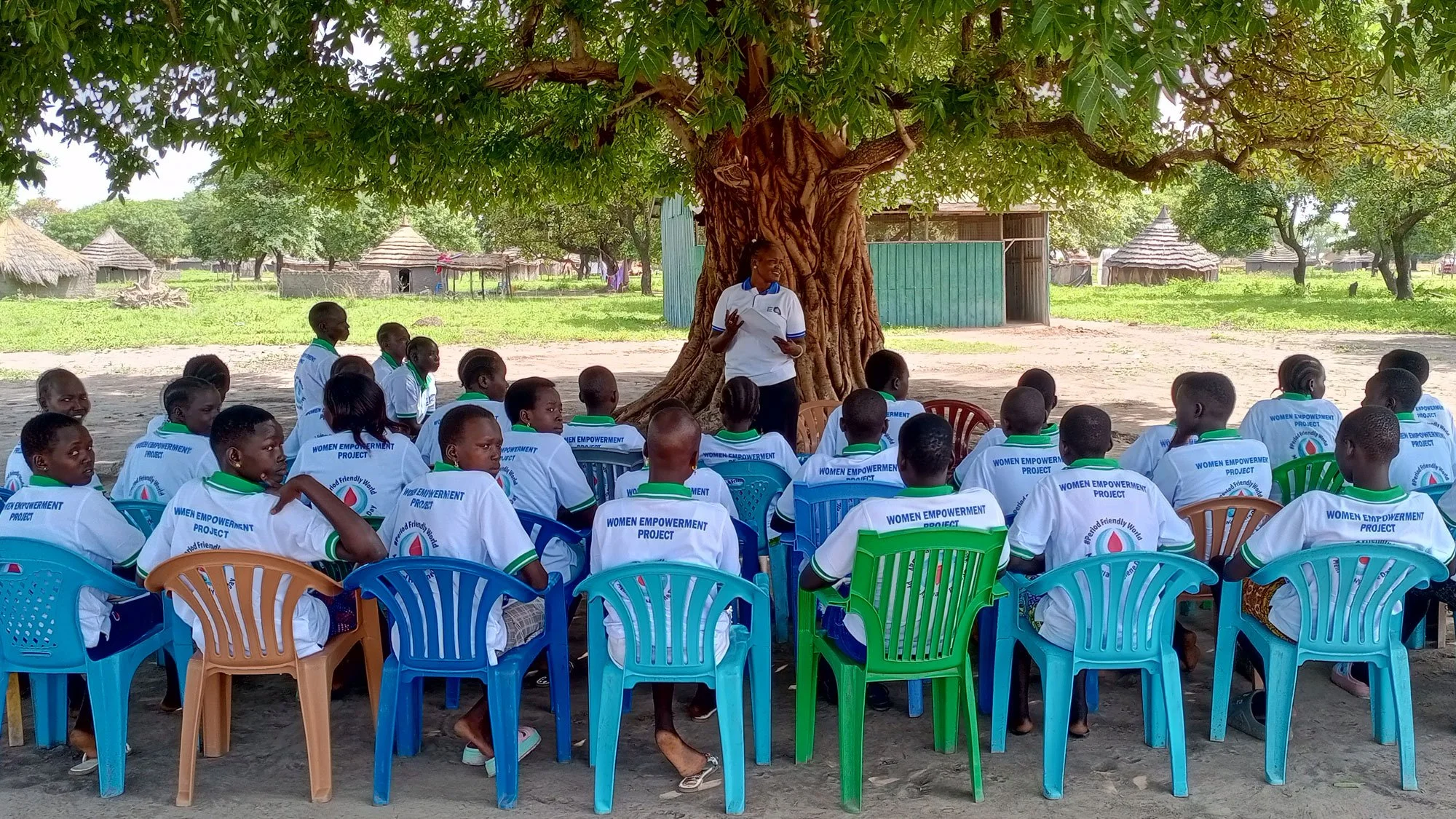
For twelve years, Suzan has worked as WFSS's Hygiene Trainer Lead — training school hygiene clubs, community household promoters, and water user committees, and delivering health and nutrition education at health facilities whenever a new well goes in. Before this role, she served as medical personnel in emergency care. She made the switch, she says, because training gave her a way to create more consistent, lasting impact than emergency response alone could offer.
It's a decision that has paid off in ways that are hard to capture in a spreadsheet.
When One Child Changes a Household
Suzan's clearest example of that impact goes back to 2020, around the height of the COVID-19 pandemic. After a borehole was installed at a local school, she trained the school's hygiene club on open-defecation prevention and proper latrine and handwashing practices. One student — just 10 years old — took what she'd learned home. She taught her own family, and the household built a temporary latrine and adopted handwashing on their own initiative. Suzan later visited the home and confirmed it herself.
"Seeing learners influence their families is what motivates my work."
It's a small story, but it captures something WFSS sees again and again: a well is a beginning, and what grows from it — awareness, habits, health — often travels further than the water itself.
What the Work Actually Looks Like
Behind every borehole project, there's a structured process Suzan and her team follow: community engagement to confirm well locations with local input, participant mobilization, and two rounds of formal training — one on community hygiene promotion, one for the water users committee — followed by ongoing instruction on water safety from source to consumption.
Her recent work has expanded into girls' menstrual health education, teaching students how to properly care for reusable pads (washing with hot water, sun-drying) and encouraging schools to provide private, soap-equipped facilities where possible.
It's necessary work — and, in Suzan's account, work with real gaps still to close. Many communities start with very little baseline knowledge of hygiene and sanitation, and external menstrual-supply distributions stopped roughly three years ago due to funding shortfalls. The result: some girls now miss two to three school days every menstrual cycle. Suzan is direct about what would help — more donor support directed specifically at girls' hygiene education and school resources in high-need areas.
Measuring Success by Going Back
Suzan doesn't rely on one-time training numbers to judge whether her work is landing. Her real measure is simpler: she returns to communities later and checks whether people are still practicing what they learned. When they are — when a habit has taken hold rather than faded — that's when she knows the training worked.
She connects this consistency directly to long-term health outcomes. Widespread adoption of good hygiene practices, she says, would lead to "a lot of changes and the reduction of the disease" in the communities she serves.
Life Outside the Field
Suzan spends her Sundays at church with her husband and two daughters — and even there, she says, she can't quite switch off the instinct to teach, often finding herself encouraging women and children in the congregation on hygiene basics.
At home, she keeps a kitchen garden, growing her own herbs and vegetables. And when it comes to cooking, her go-to dish is Kudra — a hearty okra-based stew simmered with beef, chicken, or fish, tomatoes, onions, and warming spices like cumin and coriander. It's a staple across South Sudanese households, though she laughs that her own daughters aren't its biggest fans.
The Bottom Line
For Suzan, the most meaningful impact was never going to show up in a statistic. It's watching someone change a behavior, teach someone else, and keep doing it — especially when that change spreads outward, from one trained individual to an entire household, and eventually, a community.