South Sudan: What Independence Looks Like From the Inside
On July 9, 2011, South Sudan became the world's newest nation. Fifteen years later, we sat down with members of our South Sudan team to ask what independence feels like — not through the lens of headlines, but through the lens of daily life in the communities where they live and work. What came back wasn't a simple story. It was proud and worried, hopeful and frustrated, grateful for real change and clear-eyed about how much hasn't come fast enough.
A Lifetime Change
For many on our team, Independence Day is deeply personal. It marks the end of generations of belonging to a state that many South Sudanese never felt was their own, and the start of something new to build. One team member described it simply as freedom after ages of being ruled by others — a shift that brought, in his words, a lifetime change. Others spoke of the day as one of celebration and empowerment, a marker of what South Sudanese people have accomplished on their own terms.
That sense of ownership matters. It's a reminder that the story of South Sudan's progress isn't a story about outside intervention — it's a story South Sudanese communities are writing for themselves, with partners like Water for South Sudan playing a supporting role.
What's Changed on the Ground
When our team talked about what has changed in rural communities over the past fifteen years, water came up quickly. Drilled wells and hand-pumps have brought clean water within reach of communities that once walked hours to unsafe, unreliable sources. But the team was careful to describe this as a starting point rather than a finish line — a well is a beginning, not an ending.
From that beginning, other changes have followed:
Access to education has expanded. More children, including girls, are attending consistently.
Health services have moved closer to home.
Sanitation and hygiene practices have improved and helped reduce preventable illness in communities that have adopted them.
Some communities have introduced mechanized and ox-powered farming techniques alongside traditional methods, helping improve yields where they've been adopted.
New livelihoods have taken root. Vocational training and kitchen gardens are giving families new sources of income.
Communities are putting down roots. Where seasonal migration in search of water once uprooted families year after year, reliable water points are helping more communities stay settled — though climate pressures still test that stability in some areas.
A Country the World Hasn't Caught Up To
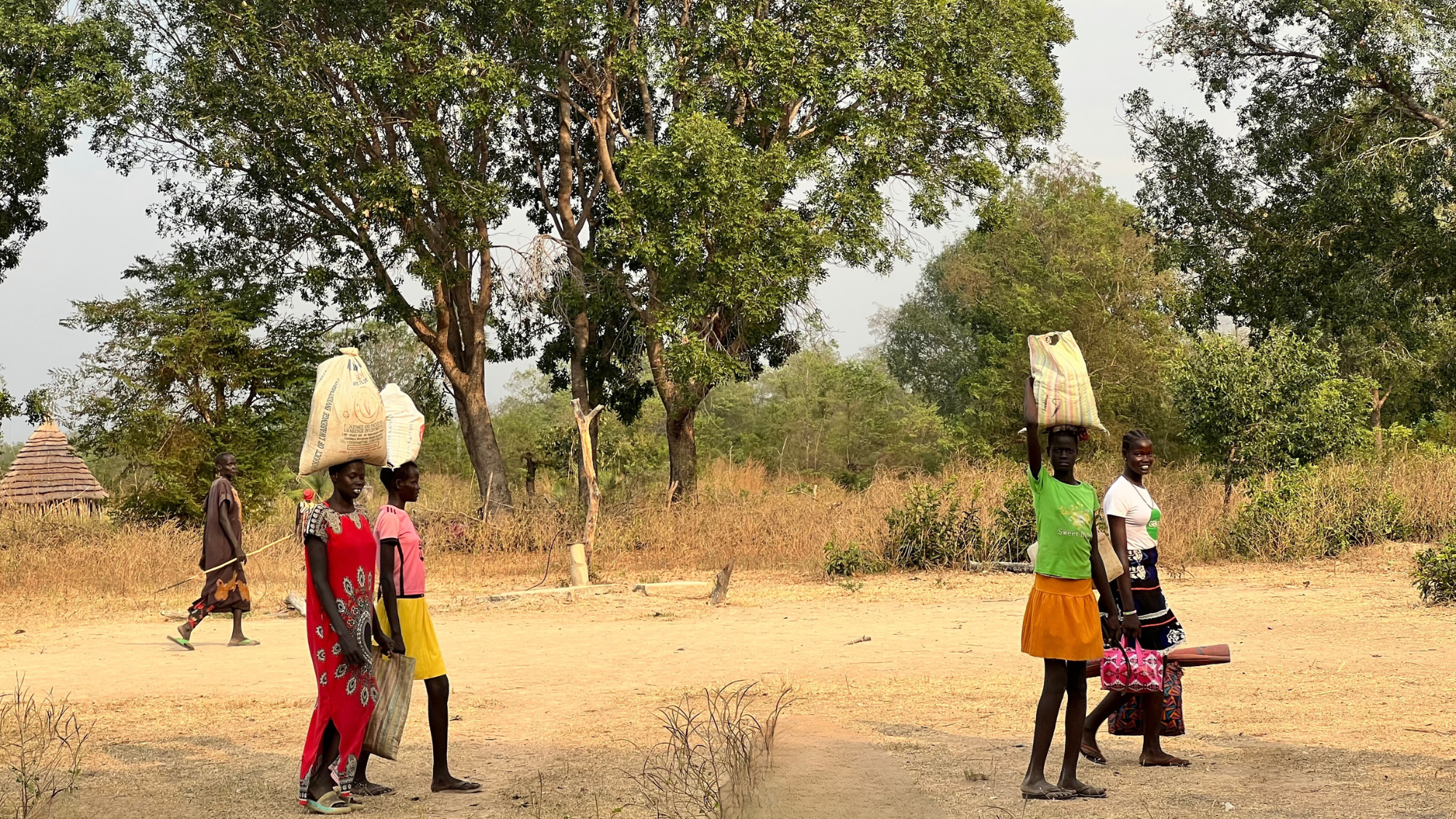
Outside South Sudan, the country is often seen through a narrow lens — conflict, crisis, need. When we asked our team what they wish outsiders understood better, no one denied that history. But they described a country that is also changing, organizing, and building in quieter ways: water points where there were none, schools filling with students who now stay enrolled, health centers reachable on foot, ox-drawn plows next to hand hoes, kitchen gardens covering school fees. That progress doesn't erase the harder chapters — team members were just as quick to name what still isn't working, what change hasn't reached yet, what continues to feel too slow. Both are true. The news coverage from years ago was never the whole country and neither is a story that only points to what's improved.
Water as the Foundation of Dignity
Several conversations returned to a common thread: water isn't just a resource, it's a foundation. Reliable access to clean water touches nearly everything else — health, education, income, and whether a community can stay together in one place instead of scattering in search of the next source.
Looking Toward the Next Chapter
Views on the years ahead weren't uniform — and that honesty matters. Some team members were candid that progress could stall if current conditions persist. Others voiced cautious optimism, pointing to a generation more civically aware than the last, to former combatants reintegrating into community life, and to a widespread war-weariness that makes many South Sudanese reluctant to see conflict return. One team member, Angelo, put it in terms of governance and character: he believes South Sudan's people — a land of upright people, in his words —will build the good governance the country needs, if leaders are willing to listen to the population.
What nearly everyone agreed on was this: none of the progress made so far happens without sustained support. What communities are building, they're building themselves — donor support doesn't replace that, it helps sustain it, giving that work room to continue rather than stall.
How We Want to Mark This Day
Independence was claimed in 2011, but it is still being made real in ordinary, daily ways, through services, leadership, resilience, and the stubborn work of building. That's what "humanitarian" meant to the people we spoke with: not a job title, but a daily choice to keep showing up for their own communities.
As Water for South Sudan reflects on this Independence Day, we're taking our cue from the people we work alongside. This isn't a moment for outside narratives about South Sudan — it's a moment to amplify South Sudanese voices describing their own progress, in their own words. It's a chance to hold two truths at once:
Real, measurable change has reached communities that had none of it fifteen years ago, and real work remains.
Something that came through clearly in these conversations was a shared sense of responsibility — several team members spoke of wanting to give back to their own communities, more than once using the word "humanitarian" not just as a job title, but as how they see themselves. For them, independence isn't only something to mark once a year; it's something to keep earning.
A united nation, provided with the basic services its people deserve is both what's been achieved so far and what continues to guide the work ahead.