A Day in the Life of a WFSS Field Technician
Ever wondered what it’s like to be a field technician in South Sudan?
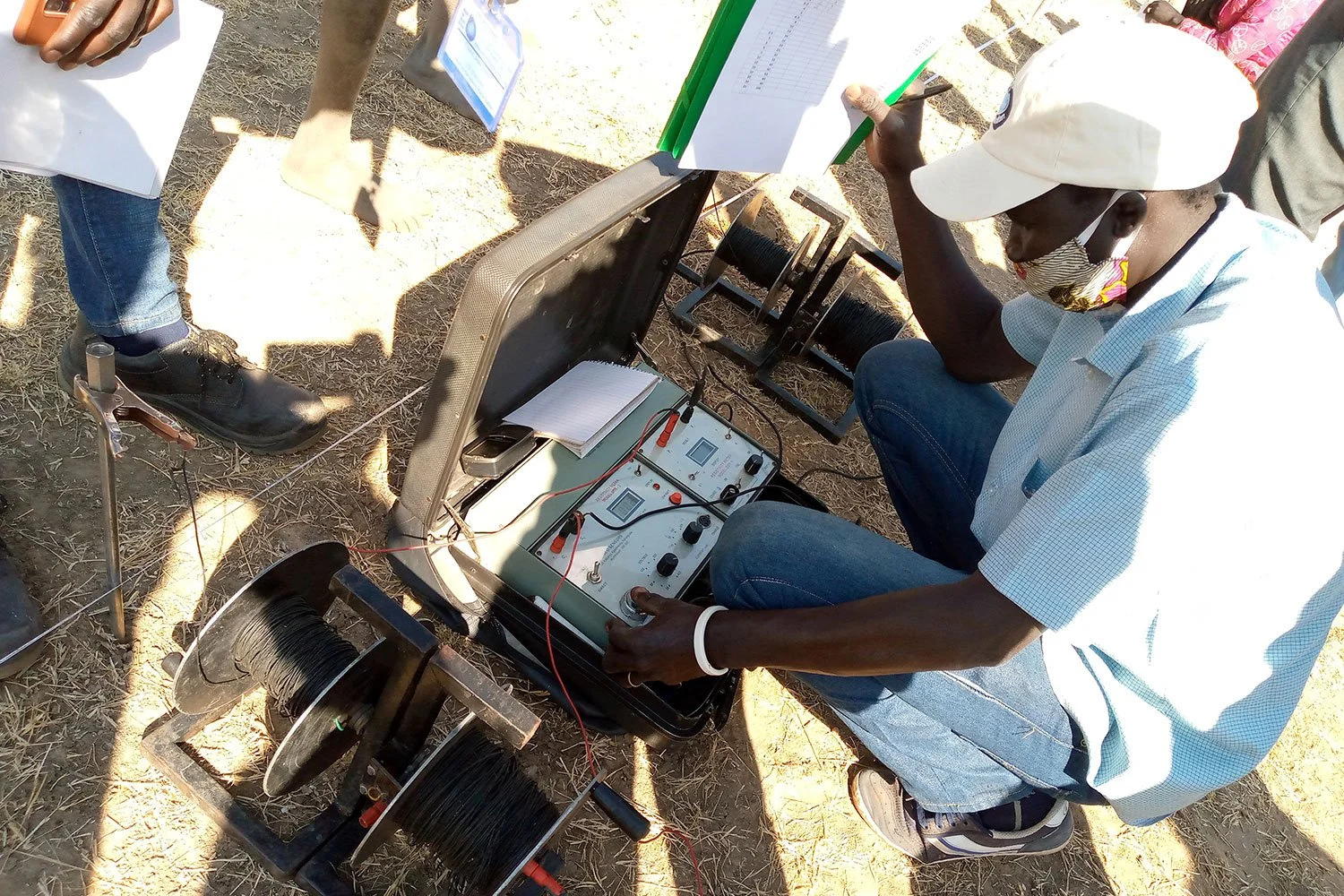
At Water for South Sudan (WFSS), our teams travel deep into villages to bring life-changing access to clean water. But before a single well is drilled, careful preparation is required. Geophysical surveys are conducted using 3 Vertical Electrical Soundings (VES) to identify the most promising aquifer zones, ensuring that each drilling site has the best chance of success.
The Importance of the Drilling Team
Once the site is selected, the drilling team arrives and begins setting up the rig. Before drilling can start, multiple trucks and staff are involved in critical preparatory tasks. One truck, with its driver and helper, is dispatched to collect water for drilling, while another collects gravel for gravel packing. Drilling can only begin after at least 2 truckloads of water have been delivered. At that point, the driller and assistant driller start the drilling operation, with helpers steadily adding drill pipes as the borehole deepens. The team also collects soil cuttings from the well, preserving them as samples.
Challenges in Water Collection
Drilling in Multiple Sources
In some locations, water for drilling must be collected from sources 3-4 hours away. This can delay progress significantly and, in some cases, the well may begin collapsing while waiting for water.Throughout the drilling process, 3 helpers work closely with the drillers to remove cuttings, add or remove drill pipes, and supply additional water during mud drilling. Drilling continues until the desired depth and yield are achieved. Once the target is reached, the team installs PVC casing and screens, secures the end cap, and completes the gravel packing.
Drilling in rocky formations
Progress is slow, fuel consumption is high, and the risk of collapse increases—especially when moisture is present in laterite layers. These conditions require highly experienced drillers.Well development follows, typically lasting 3-4 hours. During this phase, the team connects the compressor to the well and uses pressurized air to clean it. Helpers wear personal protective equipment—eye goggles, gumboots, and face masks—while holding the air pipe during the cleaning process.
Extreme Heat
Most drilling and rehabilitation work occurs during the dry season, when extreme heat makes fieldwork especially demanding for teams conducting drilling, rehabilitation, and hygiene activities.
The Importance of Pump Technicians
Pump technicians play an important role in maintaining community trust. They are often the first people villagers seek when a well malfunctions. They also provide basic training to community members on diagnosing issues and reporting them to local authorities.
WFSS Purpose
Although the work is challenging, it is deeply rewarding for the technicians who carry it out and for the communities who gain life-changing access to clean water.
Water for South Sudan remains committed to its mission of improving the quality of life for the people of South Sudan by efficiently delivering sustainable access to clean, safe water, as well as promoting better hygiene and sanitation in communities with the greatest need.
The team continues its work with dedication, ensuring that future generations benefit from these efforts.
When you support WFSS, you bring lasting change to a young nation and provide one of the most powerful tools for stability: Clean. Safe. Water. Learn the impact of your support here.