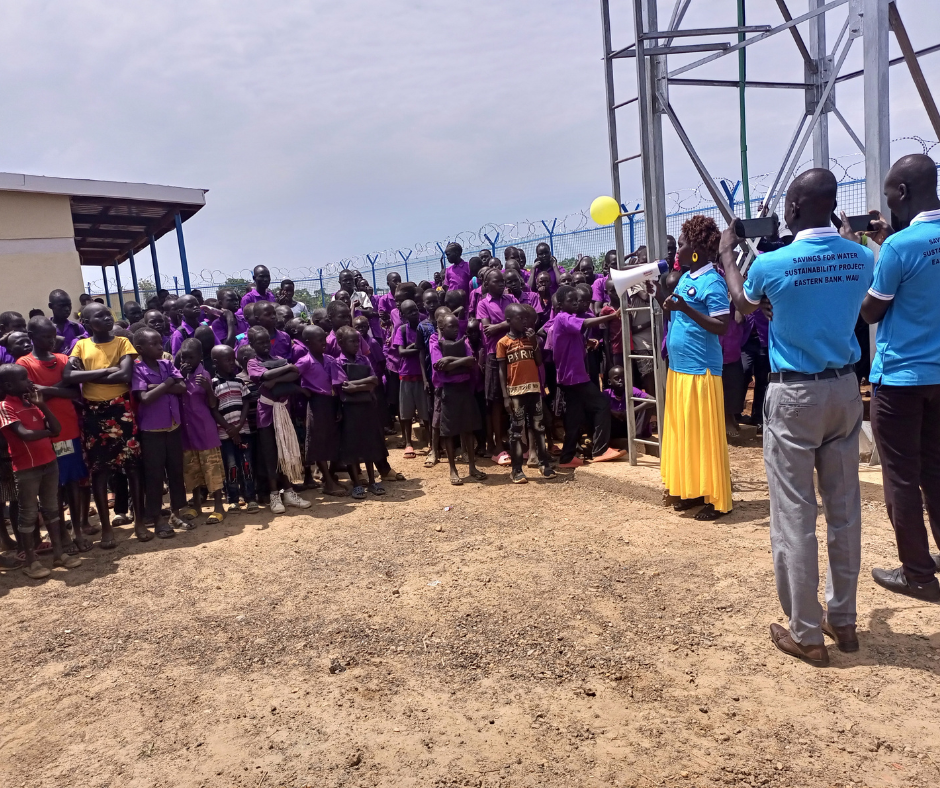

Water Storage
Clean water flows with the power of the sun
South Sudan’s dry season provides an abundant supply of solar energy, which is harnessed through solar-powered technology to pump water into elevated storage tanks. From there, gravity carries the water through underground pipes directly to community water kiosks. This reliable system operates without fuel, reduces maintenance costs, and continues to function even in remote areas without access to electricity.
With this system in place, residents simply turn on a faucet to fill their jerry cans, significantly reducing the distance, time, and physical burden of collecting water.
By bringing clean water closer to home, families can spend more time on education, farming, and livelihoods, while communities experience improved health, safety, and long-term sustainability.
What are the Components of a Water Storage & Distribution System?
Well drilled with solar power pump
Elevated water storage tank
Underground piping from tank to five to six water taps (kiosks) to locations throughout the community: community center, school, market, gardens, and animal watering trough
Construction of a sustainability room to protect the electronics that power the system, a generator shelter to protect the generator from South Sudan’s harsh elements, and security fencing to protect the entire system from potential damage
Once the water storage system supply lines are connected to solar and generator power, water storage system operators are trained to oversee the functionality of the solar-powered water pump, ensure the cleanliness of the water tank, and maintain the area surrounding the storage unit.

Credit: Kelsey Phillips, Rowan University
The Impact
An integral piece of this project includes maintenance training for the water storage system. WFSS trains the water storage maintenance person to oversee the functionality of the solar-powered water pump, ensure the water tank's cleanliness, and maintain the area surrounding the water storage unit.
Additionally, each water storage unit impacts 2,000 people or more, depending on the size of the community.